Cystic Fibrosis Foundation hepatobiliary consensus recommendations, 2024
Informed explanations of testing, monitoring, nutrition and treatment.
 LiverSteps KidsLiver health education for children and families
Cystic fibrosis (CF) can affect the liver, bile ducts and the blood vessels that carry blood into the liver. This module explains the main patterns, how the care team puts tests together, and what families can expect from follow-up.
Families may first hear about an abnormal blood test, an ultrasound finding, an enlarged spleen, low platelets or a FibroScan result. Choose the clue that sounds most familiar.
ALT, AST, GGT, bilirubin and platelets can give different clues. A temporary change during illness is different from a persistent pattern.
See how blood tests fit in →Ultrasound can show liver texture, nodularity (a bumpy or irregular appearance), fat, bile-duct or gallbladder changes, and spleen size.
See what imaging can show →An enlarged spleen (splenomegaly) and a falling platelet count can be clues to increased pressure in the portal circulation.
Understand portal blood flow →Elastography or FibroScan measures liver stiffness. It adds useful information, but it does not replace the other clues.
Understand elastography →CF can be associated with reduced bile flow (cholestasis), gallstones, strictures or other biliary changes.
See the bile-flow pathway →The team may repeat blood tests and review timing, illness, other medicines and the child’s previous liver results before deciding what the change means.
See medicines & monitoring →A liver specialist helps put the findings together, check whether another liver condition could be contributing, and decide what needs follow-up.
Prepare for the visit →The modern picture is broader than “thick bile causes cirrhosis.” In CF, the bile ducts and the portal blood-flow system are connected, but they can be affected in different ways.
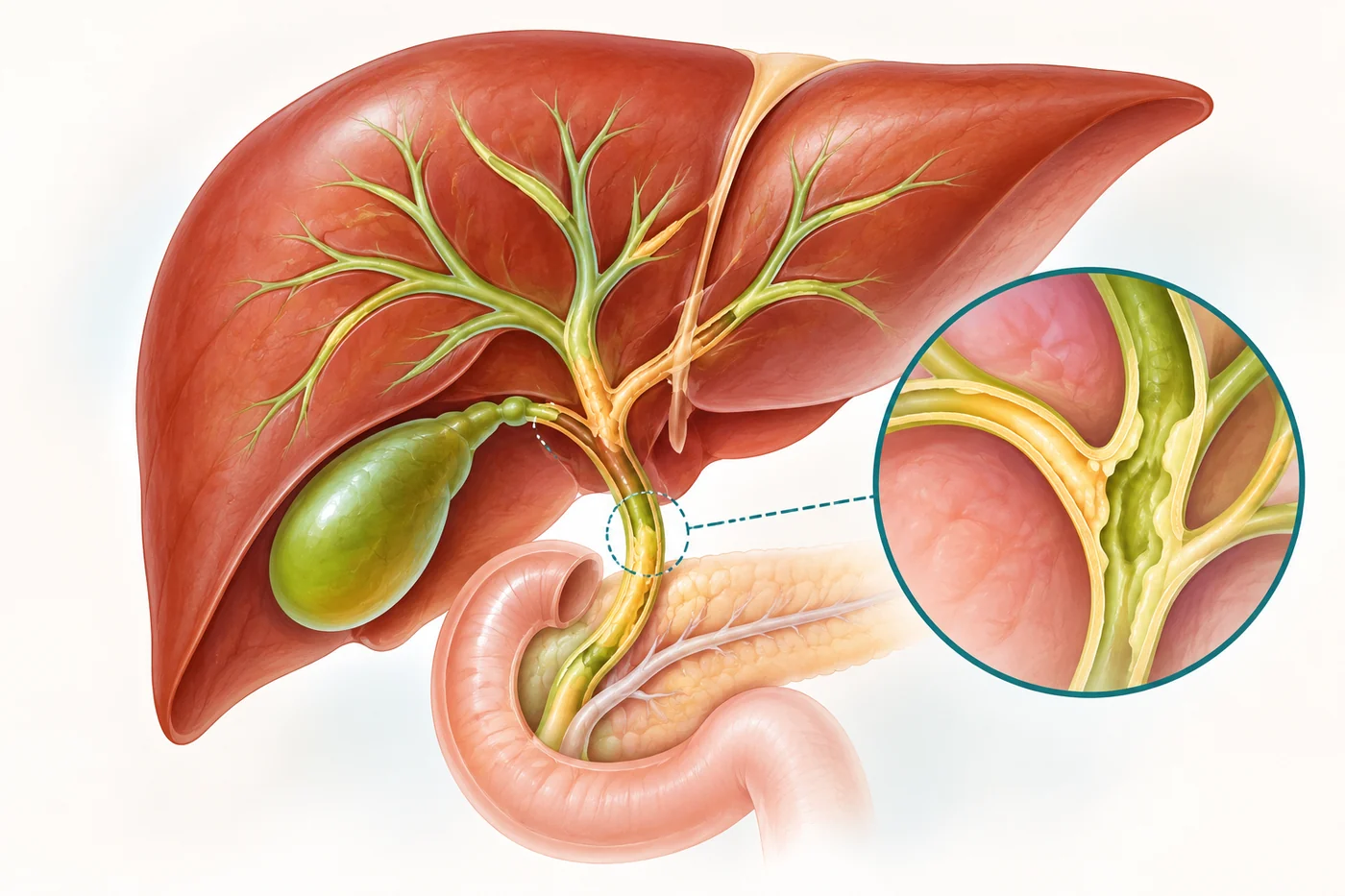
CFTR is present in bile-duct cells. Changes in bile composition and flow can contribute to biliary inflammation, narrowing, stones and patchy scarring. Bile-duct problems are only one part of the CF liver story.
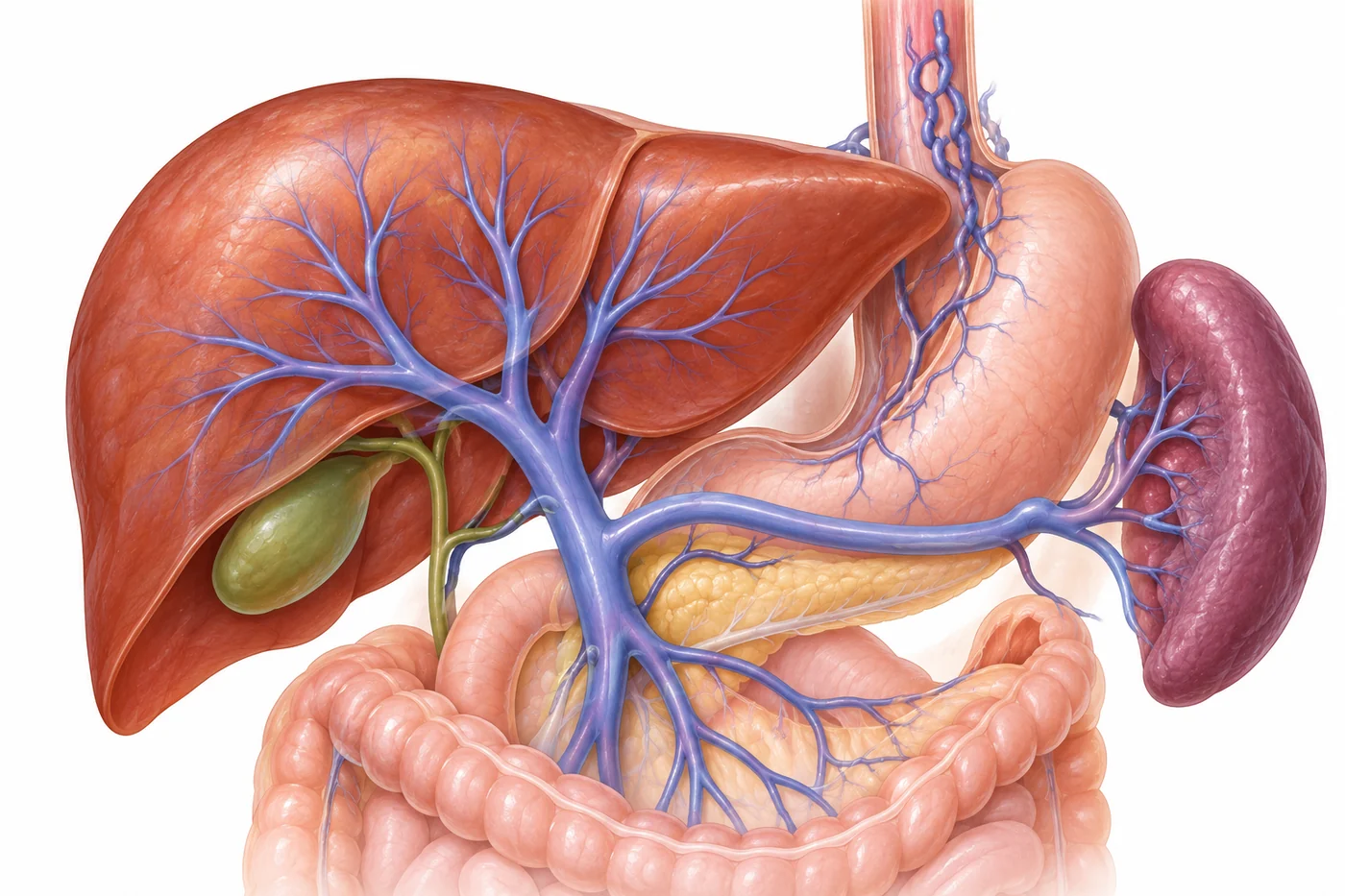
The portal vein brings blood from the intestines and spleen to the liver. In some children with CF, changes in small portal veins — called portal venopathy — can raise pressure in this system even without classic cirrhosis.
Portal hypertension means increased pressure in the portal blood-flow system. Clues can include an enlarged spleen, a falling platelet count, or varices — enlarged veins, often in the esophagus or stomach, that can bleed.
Some people with CF develop portal hypertension without the typical pattern of cirrhosis. This is why spleen size, platelets and portal-flow clues matter even when liver stiffness or liver function appears relatively preserved.
CF hepatobiliary involvement (CFHBI) is a broad term for liver or biliary abnormalities associated with CF. Advanced CF liver disease (aCFLD) is used in CFF guidance for advanced fibrosis/cirrhosis, nodular liver or non-cirrhotic portal hypertension. These labels help organize care; they do not replace an individual child’s assessment.
The exact testing plan depends on age, previous results, symptoms, medicines and whether liver involvement is already known. Different tests answer different questions, so the team looks at the whole pattern.
ALT and AST can reflect liver-cell injury; GGT and bilirubin can point toward bile-flow problems; platelets can provide an important portal-hypertension clue. Albumin and INR help assess liver function when advanced disease is a concern.
The clinician may check liver size, texture and firmness and look for an enlarged spleen. The examination adds information that blood tests cannot provide.
Ultrasound can assess liver appearance, nodularity, fat, spleen size, gallbladder and bile ducts, and selected portal blood-flow features.
Liver stiffness helps assess fibrosis risk and is useful for following trends. A reassuring stiffness result does not rule out every portal vascular problem, so platelets, spleen size and imaging still matter.
MRCP gives a detailed view of the bile ducts. It may be used when liver tests or symptoms suggest a biliary blockage or stricture but ultrasound does not fully explain the pattern.
Persistent abnormalities may prompt testing for other liver conditions rather than assuming every change is caused by CF. Liver biopsy is reserved for selected situations because CF changes can be patchy and biopsy is invasive.
These are population-level recommendations. Your child’s team may adjust timing based on results, symptoms, medicines and the overall CF plan.
Advanced disease may lead to more frequent liver blood tests and examination, closer nutrition and glucose monitoring, and specialist assessment for portal-hypertension complications. For children with cirrhosis or suspected cirrhosis, the CFF guideline recommends annual liver ultrasound and alpha-fetoprotein (AFP) surveillance for hepatocellular carcinoma.
The LiverSteps testing guide explains blood tests, ultrasound, FibroScan, MRI/MRCP, biopsy and endoscopy in plain language.
There is no single treatment for every CF-related liver finding. The plan depends on whether the main issue is biliary disease, portal hypertension, medication monitoring, nutrition or advanced liver disease.
Symptoms and imaging guide care. Symptomatic gallbladder disease may need surgery, and bile-duct obstruction may need a procedure such as ERCP.
An enlarged spleen, falling platelets, varices or bleeding can change follow-up. In children, decisions about screening endoscopy and prevention are individualized because evidence is limited.
Current CFF guidance recommends against routine ursodeoxycholic acid (UDCA) simply to prevent advanced CF liver disease. If a child already takes UDCA, the reason for treatment and ongoing plan should be individualized.
CFTR modulators are important CF therapies for eligible children. If liver tests change after a modulator is started or changed, the CF team may repeat tests and review other possible causes before deciding whether the treatment plan needs adjustment.
CF care often involves several medicines. Liver involvement may change how closely medicines and drug interactions are monitored.
Ask whether routine immunizations are up to date, including hepatitis A and hepatitis B vaccination as advised by the child’s care team. Bring supplements and over-the-counter products to medication reviews too.
Selected children with significant portal-hypertension complications or liver dysfunction may need discussion of shunt procedures or transplantation. Referral is about planning at the right time; it does not mean transplantation is inevitable.
Liver involvement can add extra nutrition questions to an existing CF care plan. The goal is to protect growth, strength, vitamin status and bone health while responding to the child’s actual liver findings.
The dietitian looks at growth, appetite, fat absorption, pancreatic function, vitamins, liver status and the child’s usual CF nutrition plan together. Advanced liver disease can increase nutritional burden, so review may become more frequent and more detailed.
Advanced liver disease can make maintaining nutrition harder. The team follows growth and may adjust energy and protein support when needed.
Bile helps digest fat. Reduced bile flow can add another layer to fat malabsorption, so symptoms and growth are interpreted alongside the child’s pancreatic enzyme and CF nutrition plan.
Vitamins A, D, E and K can be affected by CF and hepatobiliary disease. The team may monitor levels and adjust supplementation based on results.
Advanced liver disease can add to risks for metabolic bone disease and essential fatty-acid deficiency. These are reviewed with the child’s broader CF nutrition status.
Advanced CF liver disease is associated with more glucose abnormalities. CFF guidance recommends starting CF-related diabetes screening when advanced liver disease is diagnosed, even if that is earlier than the usual age-based schedule.
“Is growth on track? Does liver involvement change the vitamin plan? Are there signs of fat malabsorption, bone risk or another deficiency we should check?”
Most routine liver findings are managed through planned follow-up. A few symptoms need faster assessment because they can signal bleeding, biliary infection or worsening liver function.
You do not need to learn every liver term at once. A short list of questions, one clear contact plan and language your child understands are often more useful than trying to remember everything.
You might say: “The team is checking the liver’s bile tubes and blood flow. Different tests look at different parts, so they compare the results over time.”
Most liver findings do not automatically restrict school or activity. If the spleen is enlarged or there is a specific bleeding risk, ask whether contact sports or other activities need modification.
Keep one short liver summary with the main finding, last important test, next planned test and the name of the team reviewing it. This can reduce repeated explanations.
Before leaving clinic, know who handles routine liver questions, who gives test results, and where to call after hours if a concerning symptom develops.
Blood tests, ultrasound, FibroScan, MRCP, biopsy and endoscopy are explained separately in the LiverSteps Tests & Procedures guide.
Cystic Fibrosis Canada offers CF information, advocacy and family support resources for people living with CF across Canada.
Select the questions you want to bring.
Informed explanations of testing, monitoring, nutrition and treatment.
Informed the explanation of the different patterns of CF liver and biliary involvement.
Informed the explanation of portal blood-flow problems without cirrhosis.
Informed explanations of liver stiffness, imaging and follow-up over time.